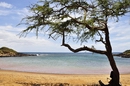
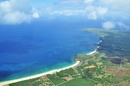
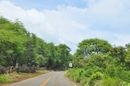
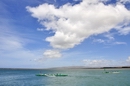
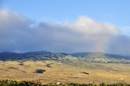
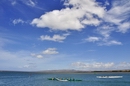
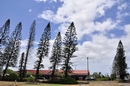
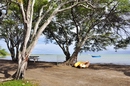
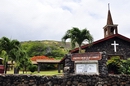
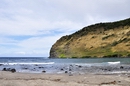
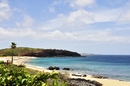
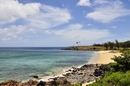
Molokai known as the "Friendly Island" of Hawaii. The island's unique history and cultural pride of the island's predominantly native Hawaiian population make this a true Hawaii vacation experience. The longest white-sand beach in Hawaii can be found along its western shore of Molokai.
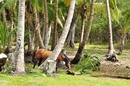
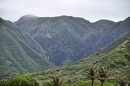
With sandy beaches to the west, sheer sea cliffs to the north, and a rainy, lush eastern coast, Molokai offers a bit of everything for everybody, including a peek at what the other Hawaiian islands were like 100 years ago. No one seems to be in a hurry, and a favorite expression is "Slow down, you're on Molokai.
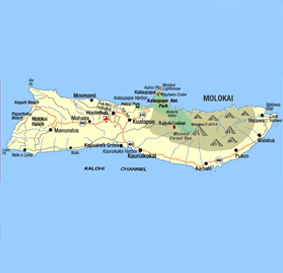
Only 38 mi long and 10 mi wide at its widest point, Molokai is the fifth-largest island in the Hawaiian chain.
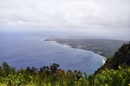
Two large volcanoes, Kamakou on the east and Maunaloa on the west rose from the ocean floor of the Pacific Ocean to created the island of Molokai. Shortly thereafter a third and much smaller caldera, Kauhako, surfaced to create the Makanalua Peninsula on the north side. Thousands of years of rain, surf, and wind, a landslide on the north side sent much of the mountain into the ocean, leaving in its path the sheer sea cliffs that make Molokai's north shore so spectacular..
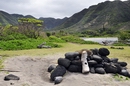
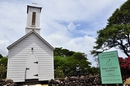
Molokai is named in chants as the child of the moon goddess Hina. For centuries, the island was occupied by natives who took advantage of the excellent reef fishing and ideal conditions for growing taro. When leprosy broke out in the Hawaiian Islands in the 1840s, the Makanalua Peninsula, surrounded on three sides by the Pacific and accessible only by a steep, switchback trail, was selected as the place to exile people suffering from the disease. The first patients were thrown into the sea to swim ashore as best they could, and left with no facilities, shelter, or supplies. In 1873 a missionary named Father Damien, who is expected to soon be canonized, arrived and began to serve the peninsula's suffering inhabitants. Though leprosy, now known as Hansen's disease, is no longer contagious and can be remitted, the buildings and infrastructure created by those who were exiled here still exist, and some longtime residents have chosen to stay in their homes. Visitors are welcome but must book a tour operated by Damien Tours of Kalaupapa. No one is allowed to wander unescorted, and no one may take photographs without the written permission of the resident.
The Birthplace of Hula
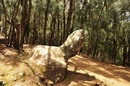
Tradition has it that centuries ago Laila i came to Molokai and lived on Puu Nana at Kaana. She brought the art of hula and taught it to the people, who kept it secret for her descendents, making sure the sacred dances were performed only at Kaana. Five generations later Laka was born into the family and learned hula from an older sister. She chose to share the art and traveled throughout the Islands teaching the dance, though she did so without her family's consent. The yearly Ka Hula Piko Festival, held on Molokai in May, celebrates the birth of hula at Kaana. |